
Construction Costs
Construction Costs in 2026: Current Prices per m²
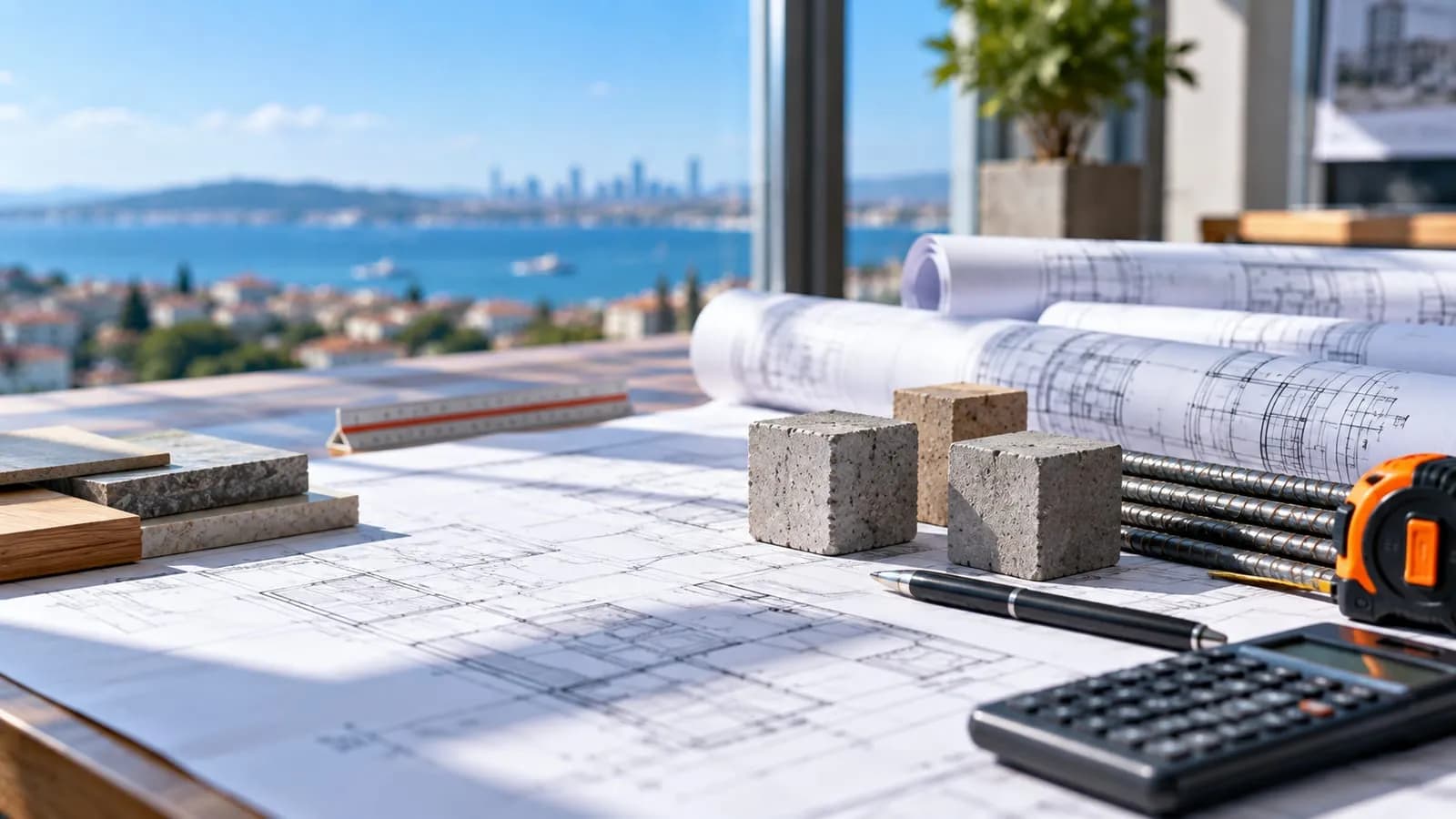
How much will construction costs be in 2026? This guide covers the latest prices for iron, cement, and labor, per square meter unit costs, and cost-saving tips for your projects.
September 2026 update: according to TurkStat's July 2026 Construction Cost Index, costs rose 1.15% month on month and 28.33% year on year; the materials index rose 27.13% and the labour index 30.51%. Building construction costs rose 28.37% year on year. Read the prices below with this increase in mind.
By 2026, construction costs will be shaped not only by material prices but also by a multifaceted set of variables including labor costs, energy costs, updated earthquake regulations, and financing conditions. Calculating only an approximate cost per square meter is no longer sufficient before starting a project. A holistic and strategic cost plan is essential for a sound investment.
This guide details current ranges for housing construction costs, villa construction costs, and commercial and industrial building costs for the year 2026, along with budget control methods.
Key Factors Determining Construction Costs in 2026
In 2026, the construction sector continues to feel cost pressure despite the economic stabilization process. The main reason for this is not so much material prices, but rather rising labor costs and a shortage of qualified personnel. Finding expert teams, especially in formwork, rebar, mechanical installations, and finishing works, has become difficult, leading to a significant increase in daily wages.
A reduction in energy costs through a pass-through mechanism. Cement, iron, and ready-mixed concrete production are high energy-consuming sectors. Increases in electricity and natural gas prices are directly reflected in material prices through production costs.
Furthermore, updated earthquake regulations require higher concrete grades, more intensive reinforcement, and improved insulation solutions. While this increases initial costs, it provides significant long-term advantages in terms of structural safety and appreciation in value.
Current Material Prices for 2026
In a construction project, material costs account for an average of 60–65% of the total budget. This percentage can vary depending on the type of construction.
Iron and Steel Prices
As of 2026, rebar prices are expected to range from an average of 29,000 TL to 33,000 TL per ton. Rebar is one of the most volatile components of structural engineering costs, and price fluctuations directly impact the total budget.
Concrete and Cement Prices
Ready-mixed concrete prices vary depending on the concrete grade and regional conditions.
| Type of Concrete | Average Price (TL/m³) |
|---|---|
| C30 | 3.200 – 4.300 |
| C35 | 3.500 – 4.600 |
The price of a 50 kg bag of cement ranges from 180 TL to 260 TL. Transportation distance and pump usage are factors that affect the price.
Unit Costs per 2026 m² According to Building Type
In 2026, the cost of construction per square meter will vary depending on the building class and quality level.
| Type of Structure | Lower Level (TL/m²) | Top Level (TL/m²) |
|---|---|---|
| Class III Apartment | 19.500 | 23.000 |
| Luxury Villa | 24.000 | 45.000+ |
| Steel Structure | 16.000 | 22.000 |
| Prefabricated House | 11.000 | 15.500 |
| Industrial & Warehouse Buildings | 12.500 | 17.000 |
For example, the cost of constructing a 200 m² mid-to-upper-segment villa, considering only construction expenses, could range from 5 to 8 million TL.
The Increasing Role of Labor Costs
In 2026, the most critical factor will be labor costs. While quality workmanship may seem to increase costs in the short term, it reduces maintenance and repair costs in the long term.
In a realistic budget plan, approximately 35–40% of the total cost should be allocated to labor.
Hidden Costs and Additional Expenses
It is important to remember that the total budget does not consist solely of rough and fine finishing works. Licensing costs, architectural and engineering projects, building inspection services, and municipal fees can reach 8–12% of the total cost.
These expenses include the following:
- Architectural and structural designs
- Soil survey and building inspection services
- Municipal license fees
- Construction site electricity and water subscriptions
In projects where financing is used, loan interest expenses should also be taken into account.
Construction Cost Calculation Formula
Total Construction Budget = (Total Area × Unit Cost per m²) + Permit & Project Expenses + Financing + 10% Unforeseen Expenses Allowance
Especially in long-term projects, it is recommended to leave at least a 10% margin of error against price fluctuations.
How to Achieve Cost Control in 2026?
Proper planning provides a significant advantage during periods of intense cost increases. Detailed quantity surveying should be carried out to prevent unnecessary material waste. Modular formwork systems and industrial solutions contribute to cost control by reducing labor time.
Energy-efficient solutions, particularly heat pump and solar panel systems, may seem costly initially, but in the long run they reduce operating expenses and increase property value.
Sustainability and Green Building Approach
By 2026, sustainable construction has become significant in terms of investment value. While initial investment costs for energy-efficient and environmentally friendly projects may increase by approximately 5–7%, this difference is offset by energy savings and higher resale value.
Frequently Asked Questions (FAQ)
Is it more advantageous to build a house in 2026?
If land costs are low and cost management is done correctly, building a house can be more advantageous in the long run.
Why does the cost of construction per square meter vary?
The quality of materials used, the level of workmanship, the city, and the project design directly affect the cost per square meter.
What is the most common additional cost?
Project modifications and erroneous quantity surveys are the most common reasons for additional costs.
Will costs continue to rise in 2026?
Due to high demand and seasonal fluctuations, concrete and labor prices may increase, especially during the summer months.
Building in 2026 is a strategic investment requiring not only technical but also strong financial planning. Risks can be minimized through accurate cost analysis, realistic budget planning, and professional execution. A comprehensive construction cost analysis, rather than superficial square meter calculations, is the most important factor determining the sustainability of the investment.
Regional Reflection of Costs
We examined how the cost items in this guide play out on site, city by city: the public-support calculation for an 80-unit building with "Half on Us" in Istanbul, the budget impact of ground improvement in İzmir and factory and hotel investment conditions in the earthquake zone.

By
Serdar Savaş · Founder and Chairman
In the construction industry since 1989; founded Savaş Grup A.Ş. in 1998. Has led 350+ factory, hotel, residential and wellness projects in 22 countries. Writes on the urban-transformation contracting model and international project partnerships.
Get a quote for this service
Fill in the form for a free survey and a transparent, quantity-based proposal; we reply within 24 hours.